
Introduction
Montessori homeschooling holds a special place in my heart, especially when it comes to making it doable without breaking the bank. I’ve picked up a bunch of Montessori homeschooling tips over the years, and I’ve found there are plenty of ways to bring Montessori principles home without spending a fortune. From DIY materials and creative use of everyday items, to smart sourcing of curriculum resources, Montessori doesn’t have to be expensive to be effective. Here’s my favorite advice for creating a Montessori-inspired homeschool on a budget, with no need to sacrifice quality or joy.
This post may contain affiliate links. If you purchase from one of our links, I may receive a small commission at no extra charge to you. For more info, check out my affiliate disclosure.
Why Montessori Homeschooling Appeals to Families on a Budget
Montessori homeschooling is all about fostering independence and curiosity, but the branded materials can get pretty pricey. What I love about the Montessori approach is its core belief that hands-on, self-directed learning creates a strong foundation for kids. You truly don’t need a classroom full of expensive toys to make this happen.
Many parents are surprised to find that Montessori is totally doable with what’s already at home or found at secondhand shops. Kids get just as excited about learning with DIY materials as they do with store-bought options, if not more. The important thing is to focus on the core values of Montessori: practical life skills, access to real tools, and a prepared environment that’s specifically arranged for your child’s needs.
It’s also worth noting that the creative freedom brought by a tight budget can spark some of the best learning moments. With a little imagination, you can put together activities that rival any prepackaged kit.
Setting Up a Montessori Friendly Space on a Budget
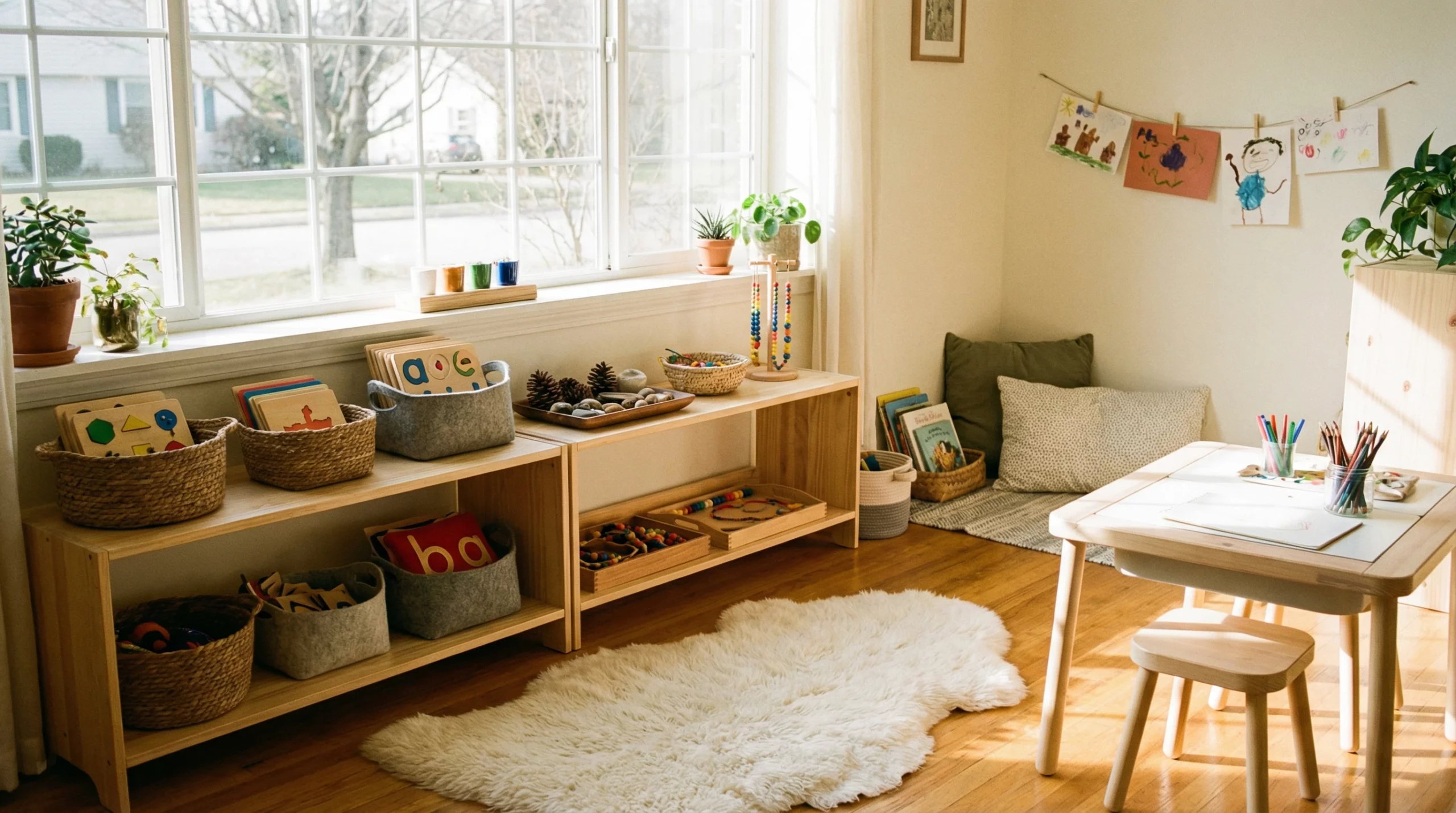
Creating a Montessori-inspired homeschool environment can feel overwhelming, especially with all the picture-perfect setups you see online. I’ve learned that simplicity really matters and you can set up a beautiful space by using just a few key strategies:
- Use low shelves or even repurposed bookcases to store activities at kid-height for easy access.
- Opt for baskets and trays from dollar stores or thrift shops, instead of specialty Montessori brands.
- Rotate activities and materials regularly to keep things fresh and avoid overwhelming your child.
- Keep clutter to a minimum, as Montessori philosophy values order and calm. Fewer, higher quality materials are often better.
Lighting makes a big difference as well. I try to use natural light whenever I can and keep things open and straightforward for easy tidy-up at the end of the day. A simple rug or mat can provide as much functionality as an expensive workstation. You don’t need to match Instagram feeds—just focus on making your space inviting and practical for your family’s needs.
DIY Montessori Materials at Home
Making your own Montessori-inspired materials is one of my favorite ways to cut costs and adds a fun, creative layer to the experience. Most classic Montessori activities can be recreated from items in your kitchen, recycling bin, or garage. Here are a few tried-and-true ideas I go back to:
- Practical life trays: Use old trays for pouring activities by setting up pitchers, beans, rice, or water. You can also use measuring spoons and cups for scooping and transferring activities.
- Homemade sensory bins: Fill a box with rice, beans, pasta, or sand for tactile play. Add small scoops or spoons from your kitchen drawer.
- Color sorting: Use buttons, pompoms, or beads you have at home with a muffin tin or ice cube tray for sorting activities.
- DIY puzzles: Cut up old greeting cards or cereal boxes to make simple jigsaw puzzles.
I always look for ways to reuse or upcycle household items. Glass jars make great containers, and wooden spoons are perfect for stirring, transferring, or even counting games. There’s so much room for creativity. Pinterest is a goldmine for free instructions on homemade Montessori materials, and even common household objects can become valuable tools in your learning setup.
You might also consider using easily found materials like clothespins for fine motor practice or egg cartons for counting games. There’s no limit to what you can invent with what’s on hand—and letting your kids help make their own materials gives them a real sense of ownership and pride.
Budget Friendly Montessori Curriculum Resources
While there are full Montessori curriculum guides out there, many are quite expensive. I’ve found that piecing together resources from free and low-cost options works very well, especially in the early years. My go-to sources include:
- Public libraries: Most libraries have Montessori books for parents and educational books for kids, covering science, music, math, and literature—often with activity suggestions built in.
- Online communities and blogs: Websites like Living Montessori Now and Montessori Nature offer free printables and activity ideas, so you can print only what you need.
- Discount stores: Discount school supply shops often have affordable items you can adapt for Montessori work, such as wooden blocks, math counters, and art supplies.
- Open ended materials: Items like building blocks, craft sticks, and reusable stickers encourage creativity across subjects without needing special kits.
If you want a more structured curriculum, secondhand bookshops or used homeschool Facebook groups often have great finds at a fraction of the cost. You might even be able to trade or swap curriculum with local homeschool friends, keeping your homeschooling dynamic and affordable. Many families also use printable resources tailored to specific lessons, letting you print just what you need and skip buying expensive new workbooks or kits.
The Role of Nature and Outdoor Learning
Nature is a central piece of Montessori learning, and it’s free! Some of my best Montessori homeschooling tips involve heading outside. A simple nature walk can turn into a lesson about plants, animal tracks, or even counting and sorting with pinecones, rocks, and leaves found in the yard or on local trails.
I keep a small basket with field guides and magnifying glasses by the door to encourage daily exploration. Collecting and classifying natural items, drawing in a nature journal, or planting a mini garden are all budget friendly, hands-on Montessori activities that kids genuinely love. You can link these activities into science, art, or language lessons with just a bit of creativity.
Practical Life Skills: Everyday Montessori and Cost Effective Learning
Real life tasks might be the most affordable Montessori materials of all. Kids love helping with cooking, cleaning, gardening, and simple repairs around the house. A sturdy child sized stool or apron lets them join right in.
- Let your child help peel carrots, slice bananas, or set the table for meals. These daily routines teach order and real world skills.
- Have them water plants or fold laundry—these tasks help with coordination, concentration, and patience, all key Montessori goals.
- Set up a small cleaning caddy with a spray bottle (filled with water), cloth, and brush so your child can help keep their space tidy and feel responsible for their environment.
Practical life activities teach independence and responsibility. No extra spending is needed, and it’s neat to see skills transfer to other subjects such as math, science, and language. What’s more, these everyday skills can be taught using the simplest household items rather than pricey accessories.
Sourcing and Rotating Affordable Toys and Supplies
One way I keep costs low is by seeking out quality, open ended toys that grow with my child. Secondhand shops, community swaps, and buy nothing groups are super useful for scoring wooden puzzles, trays, baskets, and art supplies. If you’re creative, even basic blocks or nesting cups can fill multiple educational roles in your homeschool.
I rotate toys and materials regularly to keep learning interesting and my space tidy. This habit also makes each resource feel fresh and exciting, even after months of use. Trading with friends or neighbors helps; it brings new learning materials at no cost. Don’t overlook local library toy-lending programs or freecycle networks—sometimes you can track down some real gems if you keep an eye out.
You might also reach out to local Montessori schools or daycares, as they sometimes sell or donate outgrown or surplus materials at steep discounts. It never hurts to ask!
Mixing Montessori with Free and Flexible Learning
Montessori works beautifully alongside other free learning resources. Here are a few things I’ve found especially helpful:
- Check your local library’s calendar for free STEM kits, craft classes, and story times, which can give your homeschool a little variety.
- Use free online printables for language, math, and geography lessons—you’ll stumble upon hundreds with a simple search for “Montessori homeschooling tips.”
- Mix in homemade games and puzzles, especially themed around your child’s interests, for a touch of personalized learning.
This style makes it easy to adapt to your child’s pace and interests, without needing expensive boxed curricula. Flexibility and a willingness to try new things make it possible to keep learning exciting for everyone.
Balancing Screen Free and Digital Montessori Learning
Montessori is mostly hands-on, but there’s room for digital support on a budget. I use free educational websites and simple apps sparingly, mainly to back up hands-on work in math or language. Limiting screen time keeps kids on track with Montessori’s emphasis on real-world interaction, but I also turn to online resources when I want quick reference videos or songs to reinforce a tricky concept.
Some of our favorite free (or very cheap) digital resources include Khan Academy Kids, Storyline Online, and YouTube channels focused on early math and science concepts. Using screens intentionally can help fill gaps, especially for visual or auditory learners.
Seeing Success the Montessori Way (Without the Price Tag)
I’ve seen time and again that Montessori’s real magic happens in the small, everyday moments, not in the price tag on toys or shelf setups. Kids thrive with the freedom to explore and the trust to try new things, regardless of what materials are used.
Even when you have to improvise or substitute an item, it’s all about keeping curiosity alive and following your child’s lead. Learning turns into something fun and natural, just as Maria Montessori imagined, even when you’re putting to work what you already have at home. The flexibility to adapt is possibly the biggest benefit of a Montessori-inspired, budget-friendly homeschool.
Extra Tips for Stretching Your Montessori Homeschool Dollar
- Share resources and swap with other local homeschoolers, especially big-ticket items like globe puzzles or science kits. This can add a lot of value at zero extra cost.
- Look for community centers that offer free access to art supplies, musical instruments, science materials, or even gardening tools.
- Join online Montessori groups to stumble upon deals, used materials, or even free lesson plans and guides.
- Include your child in building or assembling homemade materials—working together saves money and teaches valuable skills while deepening their connection to their work.
Also, don’t forget about local library passes to museums, zoos, and gardens—they can offer huge learning opportunities for free or at a reduced cost.
Additional Resources
- How to Create Your Own Unit Studies (Perfect for Montessori Fans)
- Montessori inspired homeschooling supplies and activity ideas
If you buy from any of our links, I may get a small commission at no extra cost to you. Check out my affiliate disclosure for details.