
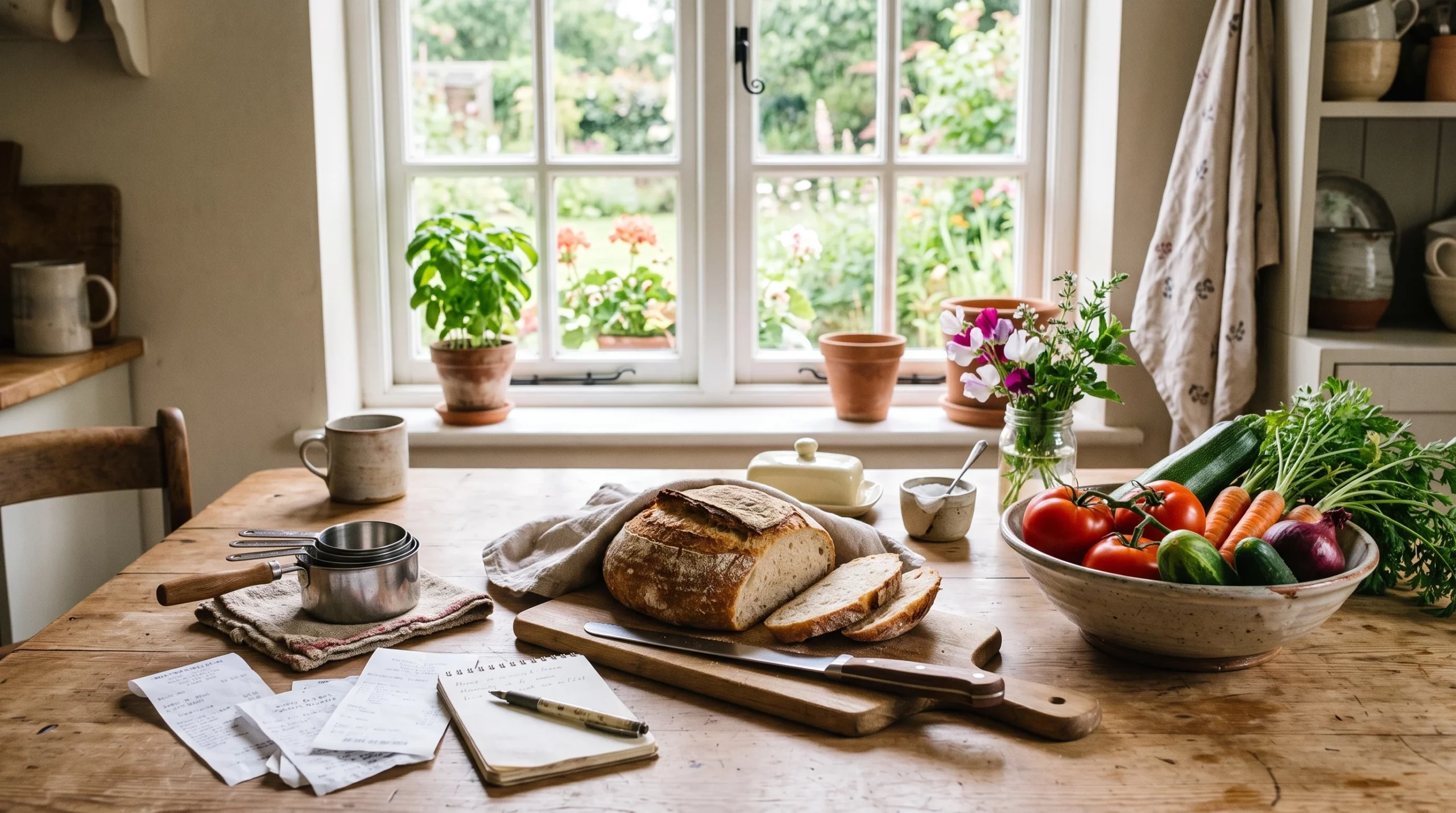
Learning doesn’t begin when you open a textbook, and it doesn’t end when you put your homeschool materials away.
Everyday activities provide opportunities for children to develop academic knowledge, practical skills, critical thinking, and independence.
Cooking dinner can involve mathematics and chemistry. Grocery shopping introduces budgeting and comparison skills. Gardening creates opportunities to investigate biology, weather, and environmental science.
Even ordinary conversations can introduce unfamiliar subjects and encourage children to ask questions.
The challenge isn’t necessarily finding more educational activities. Sometimes it’s recognizing the learning opportunities already present in your family’s daily life.
That’s what everyday learning is all about.
This post may contain affiliate links. When you click and purchase from any of our links, we may get a small commission at no extra cost to you. For more information, check out our affiliate disclosure.
What Is Everyday Learning?
Everyday learning is the process of developing knowledge and skills through ordinary activities, experiences, conversations, and responsibilities.
Rather than treating education as something that happens exclusively during designated school hours, everyday learning recognizes the educational opportunities that naturally occur throughout the day.
These experiences might involve preparing meals, maintaining your home, managing money, exploring your community, caring for animals, or solving everyday problems.
Some learning happens spontaneously.
Other experiences involve parents intentionally introducing information, demonstrating skills, or encouraging children to investigate questions that arise.
Both approaches can contribute to a child’s education.
Everyday learning doesn’t require abandoning textbooks, formal lessons, or your existing homeschooling approach.
It simply recognizes that education extends beyond traditional academic materials.
Why Learning Doesn’t Always Look Like School
Traditional education often separates academic subjects into individual lessons.
Mathematics, science, reading, writing, and social studies may each have designated instructional periods.
Real life rarely works that way.
Consider preparing a family meal.
You might read a recipe, calculate ingredient quantities, compare prices, investigate cooking techniques, and discuss where particular ingredients originate.
One activity can involve several academic subjects alongside practical life skills.
Everyday learning provides opportunities to recognize these connections and understand how knowledge applies outside a classroom.
It also allows children to practice skills in meaningful situations.
A child who struggles to understand fractions in a workbook might find measuring ingredients helpful because the mathematics serves an immediate purpose.
That doesn’t mean everyday experiences will replace every type of academic instruction.
Instead, they provide opportunities to introduce concepts, practice existing skills, and connect academic knowledge with practical experiences.
How to Recognize Everyday Learning Opportunities
Once you begin looking for educational connections in ordinary activities, you’ll notice opportunities throughout your day.
Start by paying attention to situations involving questions, decisions, problem-solving, communication, or unfamiliar tasks.
For example:
- Preparing meals involves reading, measurement, planning, and food safety.
- Grocery shopping introduces budgeting, comparison, estimation, and decision-making.
- Household responsibilities develop organization, independence, and practical skills.
- Gardening creates opportunities to investigate biology, weather, and environmental science.
- Conversations encourage communication, reasoning, and the exploration of unfamiliar ideas.
- Community activities introduce geography, history, economics, and civic awareness.
You don’t need to identify an academic objective every time your child participates in an activity.
Sometimes the educational value becomes apparent afterward.
Other times, a simple question can introduce an entirely new learning opportunity.
Everyday Learning Through Cooking and Baking
The kitchen provides opportunities to explore mathematics, science, literacy, and practical life skills.
Even preparing a simple meal involves several different processes.
Children can practice reading recipes, identifying ingredients, following instructions, measuring quantities, and organizing the steps required to prepare food.
As their abilities develop, they can take greater responsibility for planning and preparing meals.
Mathematics in the Kitchen
Cooking introduces practical applications for fractions, multiplication, division, measurement, and conversions.
For example, ask your child to help double a recipe.
How much flour will you need if the original recipe requires one and a half cups?
What happens if you want to prepare half the original quantity?
Older children might calculate ingredient costs, compare package sizes, or estimate the total cost of preparing a meal.
Science Through Cooking
Cooking also provides opportunities to investigate chemistry and physics.
Explore what happens when yeast produces gas during breadmaking.
Observe how ingredients change when heated, cooled, mixed, or frozen.
Investigate why certain ingredients react with one another or how temperature affects cooking.
You don’t need to turn every recipe into a science experiment.
When something unexpected happens, however, it can provide an excellent opportunity to investigate why.
Reading, Writing, and Practical Skills
Following recipes develops reading comprehension and sequencing skills.
Children who enjoy cooking might create their own recipes, maintain a family cookbook, or research foods from different cultures.
Meal preparation also introduces organization, time management, kitchen safety, and responsibility.
Everyday Mathematics Through Grocery Shopping and Budgeting
Grocery shopping provides practical opportunities to explore mathematics, financial literacy, and decision-making.
Children can help create shopping lists, estimate costs, compare products, and understand how purchasing decisions affect a household budget.
Comparing Prices and Understanding Value
Introduce your child to unit pricing.
Two packages might have different prices, but which provides the better value?
Compare prices per ounce, pound, or individual item.
You can also discuss how product quality, quantity, and actual household needs influence purchasing decisions.
Budgeting and Financial Literacy
Give your child an age-appropriate shopping budget.
Ask them to choose several items while keeping the total within the available amount.
They might estimate costs, calculate totals, compare alternatives, or investigate how sales and discounts affect prices.
Older children can participate in meal planning and investigate the relationship between household budgets, food choices, and financial priorities.
Reading and Critical Thinking
Shopping also involves reading signs, comparing ingredient lists, interpreting product labels, and evaluating information.
These experiences introduce opportunities to discuss advertising, nutrition information, product claims, and consumer decision-making.
Learning Through Household Responsibilities
Household responsibilities provide opportunities to develop independence, organization, practical skills, and problem-solving abilities.
Children can participate in age-appropriate activities such as organizing household supplies, sorting laundry, maintaining their belongings, preparing meals, or helping plan household projects.
These experiences also introduce academic concepts.
Mathematics and Organization
Sorting laundry introduces classification and categorization.
Measuring furniture before rearranging a room provides practical experience with dimensions and spatial reasoning.
Planning household projects might involve calculating quantities, estimating costs, measuring materials, or creating schedules.
Problem-Solving and Practical Skills
When something needs maintenance or repair, children can observe how problems are identified and solutions are developed.
For example, measuring a space for new furniture involves gathering information, comparing options, and evaluating practical constraints.
Children can participate in safe, age-appropriate tasks while adults handle hazardous tools, electricity, chemicals, and other potentially dangerous activities.
Planning and Responsibility
Household responsibilities also introduce time management and organizational skills.
Children might create checklists, organize their belongings, plan the steps involved in completing a task, or help establish routines.
The goal isn’t to make every household responsibility an academic assignment.
It’s to recognize the skills children develop when they participate meaningfully in everyday family life.
Everyday Science Through Gardening and Outdoor Activities
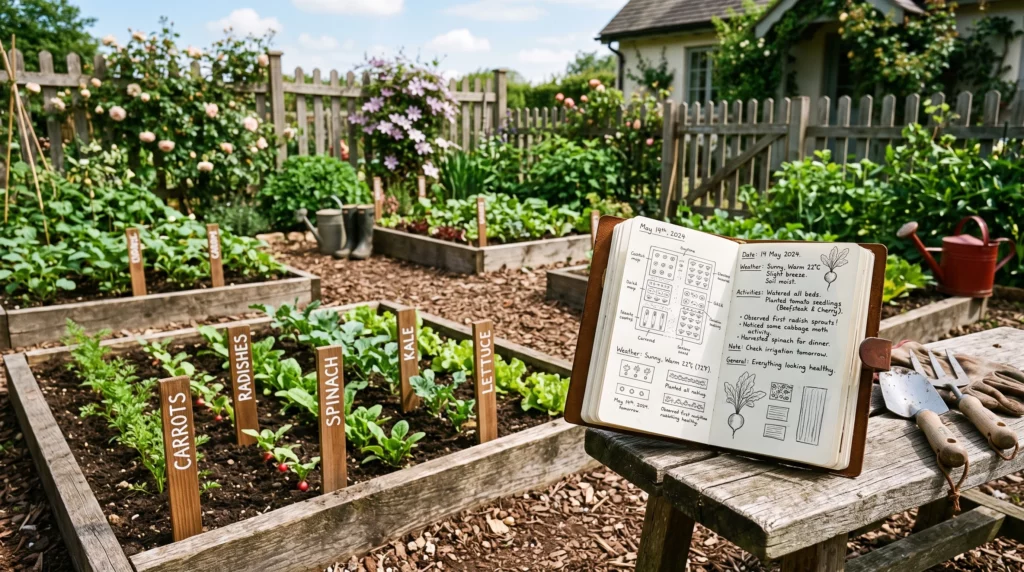
Gardening provides opportunities to explore biology, environmental science, mathematics, and scientific observation.
Children can participate in selecting plants, preparing growing spaces, planting seeds, watering, observing growth, and harvesting.
These activities naturally introduce questions.
Why do some plants need more sunlight than others?
What happens when plants receive too much or too little water?
How do insects interact with plants?
Why do certain plants grow better during particular seasons?
Exploring Plant Biology
Observe germination, root development, plant growth, flowering, and seed production.
Investigate what plants need to survive and how environmental conditions influence their development.
Children might compare different plants, investigate pollination, or explore the relationships between plants and insects.
Mathematics and Scientific Observation
Gardening can also introduce measurement, estimation, data collection, and recordkeeping.
Measure planting distances, compare plant growth, record temperatures, or track rainfall.
Children interested in documenting their observations might maintain a garden journal or photograph changes over time.
Learning Beyond the Garden
You don’t need an established garden to explore everyday science.
Observing weather, identifying local plants, investigating insects, examining rocks, or watching seasonal changes can introduce numerous scientific subjects.
Your immediate environment provides opportunities for observation and investigation.
Learning Through Conversations and Everyday Questions
Not every educational opportunity requires a project or physical activity.
Ordinary conversations can introduce children to unfamiliar subjects, encourage critical thinking, and help them develop communication skills.
Children naturally encounter information throughout their day.
They might ask why something happened, how an object works, where a product originated, or why people have different opinions about a particular subject.
These questions can become starting points for further exploration.
Encourage Questions and Investigation
You don’t need to know every answer.
Sometimes the most useful response is investigating a question together.
Look for reliable information, compare explanations, or demonstrate how to research an unfamiliar subject.
Children can observe how adults approach questions, evaluate information, and develop their understanding.
Practice Communication and Reasoning
Everyday conversations also provide opportunities to explain ideas, describe experiences, ask questions, and consider different perspectives.
Discuss books, documentaries, family decisions, community events, or interesting information your child encounters.
Encourage children to explain their reasoning and ask follow-up questions.
Not every conversation needs an educational objective.
Simply creating an environment where questions and discussions are welcome provides opportunities for learning.
Learning Through Errands and Community Activities
Everyday errands and community experiences can introduce children to geography, economics, communication, history, and practical life skills.
A visit to the post office might introduce questions about transportation, communication systems, geography, and logistics.
Visiting a farmers market provides opportunities to investigate agriculture, local businesses, pricing, seasonal produce, and community economics.
A trip to the library can introduce research skills, information organization, and unfamiliar subjects.
Understanding How Communities Work
Children can learn about community services and local organizations through ordinary experiences.
Visiting businesses, attending community events, volunteering, or exploring public spaces can introduce different occupations and the responsibilities involved in maintaining a community.
Geography and Local History
Traveling through your community provides opportunities to practice navigation, interpret maps, identify landmarks, and investigate local history.
Even familiar destinations can introduce new questions about geography, transportation, architecture, and how communities develop.
Communication and Independence
As children become comfortable, encourage age-appropriate participation in everyday interactions.
They might ask a librarian for assistance, make a purchase with supervision, request information, or help plan an outing.
These experiences provide opportunities to develop communication, confidence, and practical independence.
How to Encourage Everyday Learning Without Turning Everything Into a Lesson
Recognizing everyday learning opportunities doesn’t mean every family activity needs an educational objective.
Children need opportunities to enjoy experiences without constantly being questioned, evaluated, or redirected toward academic subjects.
The goal is to support learning without making ordinary family life feel like an endless school day.
Start by allowing children to participate in everyday activities.
Demonstrate skills, explain unfamiliar processes, and answer questions when they arise.
When an activity creates genuine curiosity, provide opportunities to investigate further.
If your child isn’t interested in exploring a particular connection, you don’t necessarily need to pursue it.
Sometimes preparing dinner is simply preparing dinner.
The educational opportunities will still be there another day.
How Everyday Learning Fits Different Homeschooling Approaches
Everyday learning isn’t exclusive to one homeschooling philosophy.
Families can incorporate it into structured, flexible, or interest-based educational approaches.
Traditional Homeschooling
Families using a structured curriculum can incorporate everyday experiences to reinforce concepts introduced during formal lessons.
Cooking might provide opportunities to practice fractions.
Shopping can reinforce mathematics and financial literacy.
Gardening might complement lessons about biology or environmental science.
These experiences allow children to apply academic knowledge in practical situations.
Eclectic Homeschooling
Eclectic homeschoolers can combine formal educational resources with hands-on experiences and everyday activities.
A family might use textbooks for certain subjects while exploring other topics through projects, practical experiences, and independent investigation.
Eclectic Homeschooling: How to Combine Methods for Success
Unschooling
Everyday experiences are an important component of many unschooling approaches.
Rather than separating education into predetermined academic lessons, unschooling families often recognize learning through personal interests, relationships, practical experiences, and engagement with the world.
Parents can actively introduce opportunities, provide resources, and support exploration while allowing learning to develop through everyday life.
Explore Our Unschooling Resources
How Everyday Learning Connects With Child-Led and Interest-Led Learning
Everyday learning frequently overlaps with child-led and interest-led learning.
The difference is where each approach places its emphasis.
Everyday learning recognizes educational opportunities within ordinary experiences.
Child-led learning emphasizes giving children meaningful influence over their education.
Interest-led learning uses a child’s existing interests as starting points for educational experiences.
For example, preparing dinner is an everyday learning opportunity.
If your child chooses which meal to prepare and decides how to approach the activity, it can also involve child-led learning.
If your child develops a strong interest in cooking and begins investigating recipes, culinary techniques, or food-related careers, the experience can develop into interest-led learning.
These approaches can complement one another without requiring families to adopt a particular educational philosophy.
Child-Led Learning: A Practical Guide for Homeschool Parents
Interest-Led Learning: How to Build Learning Around What Your Child Loves
Recognizing and Documenting Everyday Learning
One challenge homeschool parents sometimes encounter is recognizing educational progress when learning doesn’t produce traditional assignments.
Everyday learning often involves conversations, experiences, observations, and practical activities rather than completed worksheets.
Simple documentation can help you recognize patterns and identify skills your child is developing.
Keep Brief Learning Notes
Consider recording meaningful activities and the educational concepts involved.
For example:
- Prepared bread and investigated how yeast works.
- Compared grocery prices and calculated unit costs.
- Measured garden beds and planned planting distances.
- Investigated a question about local wildlife.
- Planned a family outing using maps and estimated travel times.
These notes don’t need to become lengthy reports.
Save Examples of Learning
Photographs, project samples, written work, drawings, charts, and other materials can help document educational experiences.
You might photograph a completed project, save a child’s original recipe, or keep a record of an investigation they completed.
Follow Your State’s Requirements
Documentation requirements vary depending on your location and educational program.
Before deciding which records to maintain, review the requirements that apply to your family.
Even when extensive documentation isn’t legally required, keeping simple records can help you recognize educational progress and identify subjects worth exploring further.
LINK: Documenting Interest-Led and Unschooling Learning [COMING SOON]
Getting Started with Everyday Learning
You don’t need to create an elaborate schedule or purchase additional materials to begin recognizing everyday learning.
Start with activities your family already does regularly.
Choose one or two opportunities where your child can participate more actively.
Perhaps they can help plan a meal, compare grocery prices, maintain a garden, organize a household project, or investigate a question that comes up during a conversation.
Provide age-appropriate responsibilities and opportunities to make decisions.
Pay attention to the skills involved and the questions that arise.
If your child becomes particularly interested in an activity, consider introducing related subjects or resources.
Over time, you’ll begin recognizing more opportunities to connect everyday experiences with educational concepts.
Final Thoughts
Everyday learning recognizes that education extends beyond textbooks, worksheets, and scheduled lessons.
Ordinary activities provide opportunities to develop academic knowledge, practical skills, critical thinking, communication, and independence.
You don’t need to turn every experience into a formal lesson or identify an educational objective for every family activity.
Instead, involve your child in everyday life, introduce opportunities, encourage questions, and recognize the learning that happens along the way.
Sometimes the most meaningful educational experiences begin with something your family was already planning to do.
Resources and Links
Internal Resources
- Child-Led Learning: A Practical Guide for Homeschool Parents
- Interest-Led Learning: How to Build Learning Around What Your Child Loves
- Unschooling — https://azhomeschoolers.com/unschooling/
- Homeschool Learning Ideas — https://azhomeschoolers.com/homeschool-learning-ideas/
- Eclectic Homeschooling: How to Combine Methods for Success
- Documenting Interest-Led and Unschooling Learning — [COMING SOON]
External Resources
- Smithsonian Learning Lab — https://learninglab.si.edu/
Educational collections covering science, history, art, culture, and other subjects. - Khan Academy — https://www.khanacademy.org/
Free educational lessons and practice across numerous academic subjects. - PBS LearningMedia — https://www.pbslearningmedia.org/
Educational videos and interactive resources covering a wide range of subjects. - National Geographic Education — https://education.nationalgeographic.org/
Educational resources covering geography, science, nature, and environmental topics.
When you click and purchase from any of our links, we may get a small commission at no extra cost to you. For more information, please see our affiliate disclosure.